
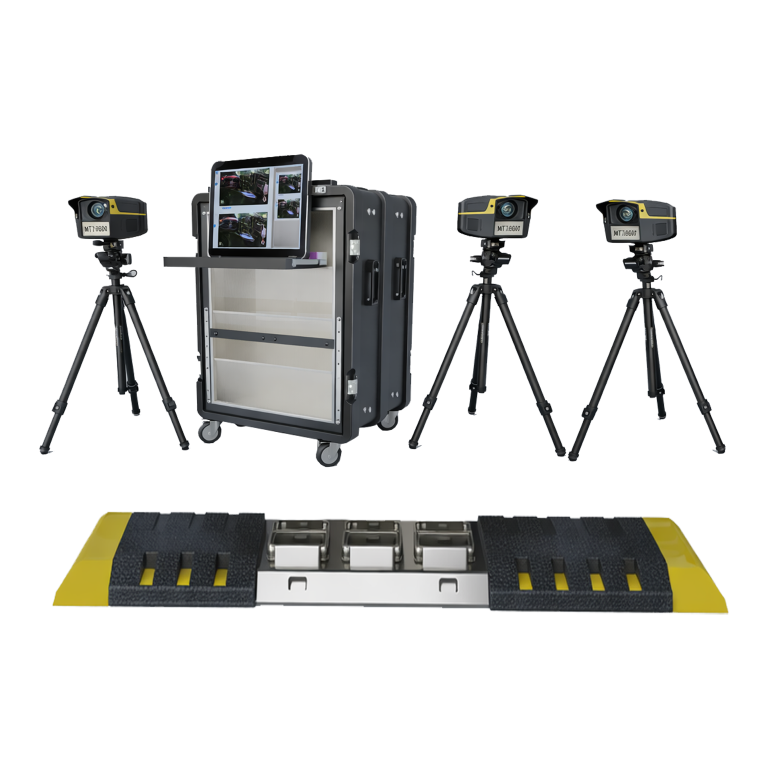
Portable Vehicle Underbody Scanning System – EYEVIGIL LLC PVUSS-400PEV Series
The PVUSS-400PEV series portable underbody scanning system is an advanced solution designed for efficient and reliable vehicle inspection. It features a dual-mode operation that combines both area scanning and linear scanning technologies, enabling enhanced accuracy and faster detection.
This system is capable of identifying suspicious items such as drugs, weapons, and other illicit cargo with high precision.
Its real-time image analysis significantly streamlines the inspection process, improving both speed and operational efficiency.

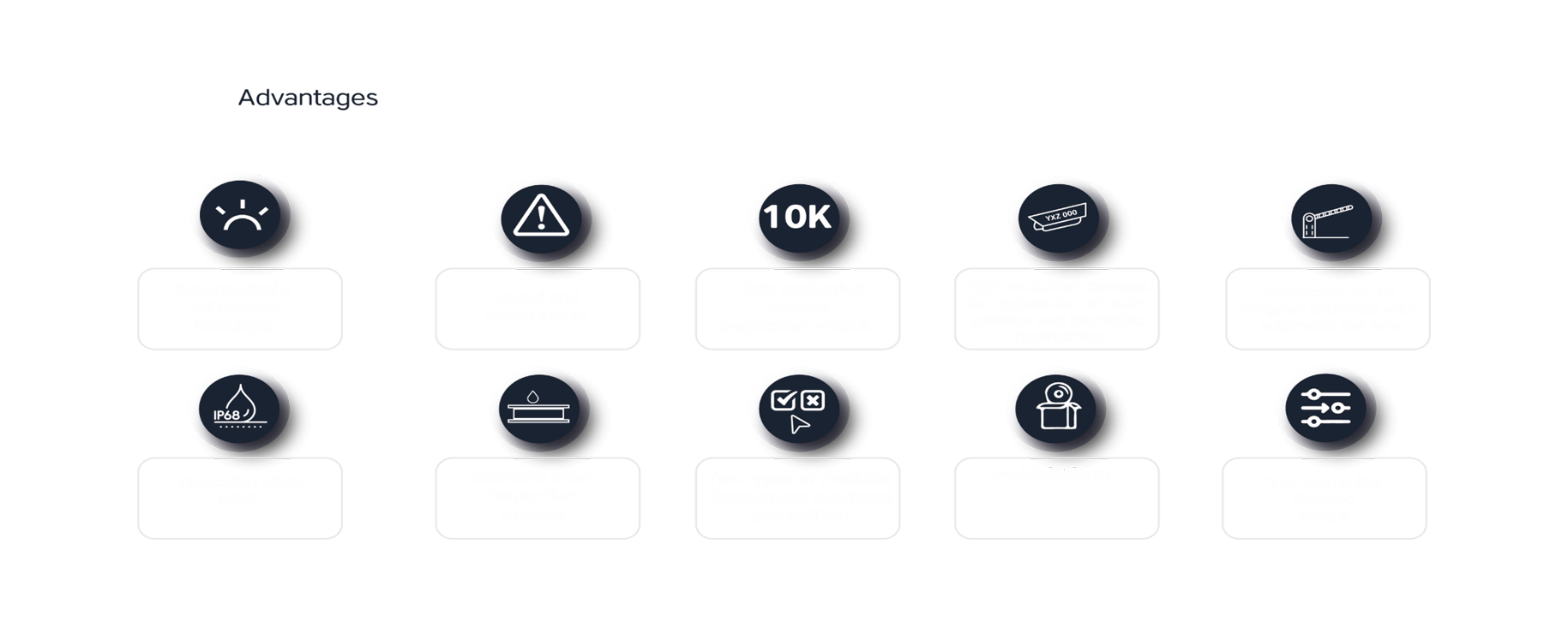
Protection Class
IP68

High resolution
camera inspection module

Interaction of program
interface with automatic barriers

Two types of inspection modules
overhead and built-in

Fine-tuning
the finished image

Multiplatform
software
Two types of inspection modules
The PVUSS-400PEV series portable underbody scanning system is an advanced solution designed for efficient and reliable vehicle inspection. It features dual-mode operation, enabling the simultaneous use of both area scanning and linear scanning technologies. This combination ensures high accuracy and rapid detection of suspicious items, including drugs, weapons, and other illicit cargo. The system performs real-time image analysis, significantly enhancing operational efficiency and simplifying the inspection process.
The PVUSS-400PEV series portable vehicle underbody scanning system is used at entrances to shopping malls, parking lots, warehouses, and other facilities to ensure security and prevent accidents.
The PVUSS-400PEV checkpoint offers ease of use and high reliability, making it an indispensable tool for security services and law enforcement agencies. The system’s portability allows for easy transportation and installation in various environments, enabling rapid response to potential threats. The system’s modern technologies significantly improve the effectiveness of security screening and help protect society from criminal activity.
Equipment and dimensions
This system is ideal for use in a variety of sectors, including government, military, and corporate facilities. It can be effectively integrated into checkpoints to screen various types of vehicles, including vans, tractor-trailers, buses, and cars. Importantly, this system not only enhances security but also promotes compliance by preventing the transport of prohibited items.
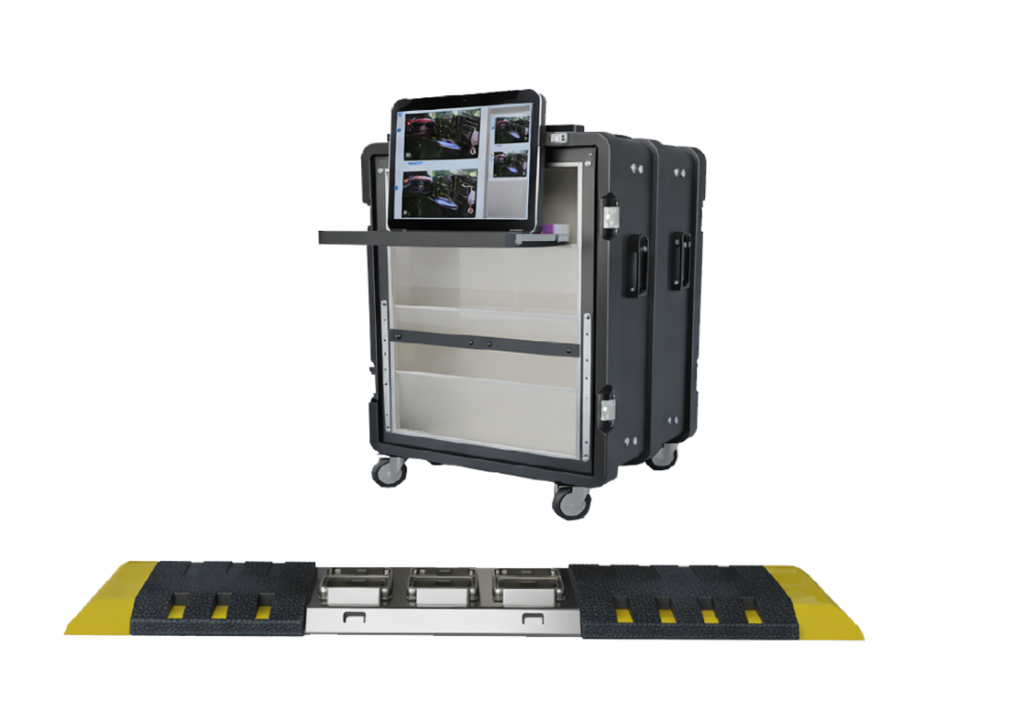
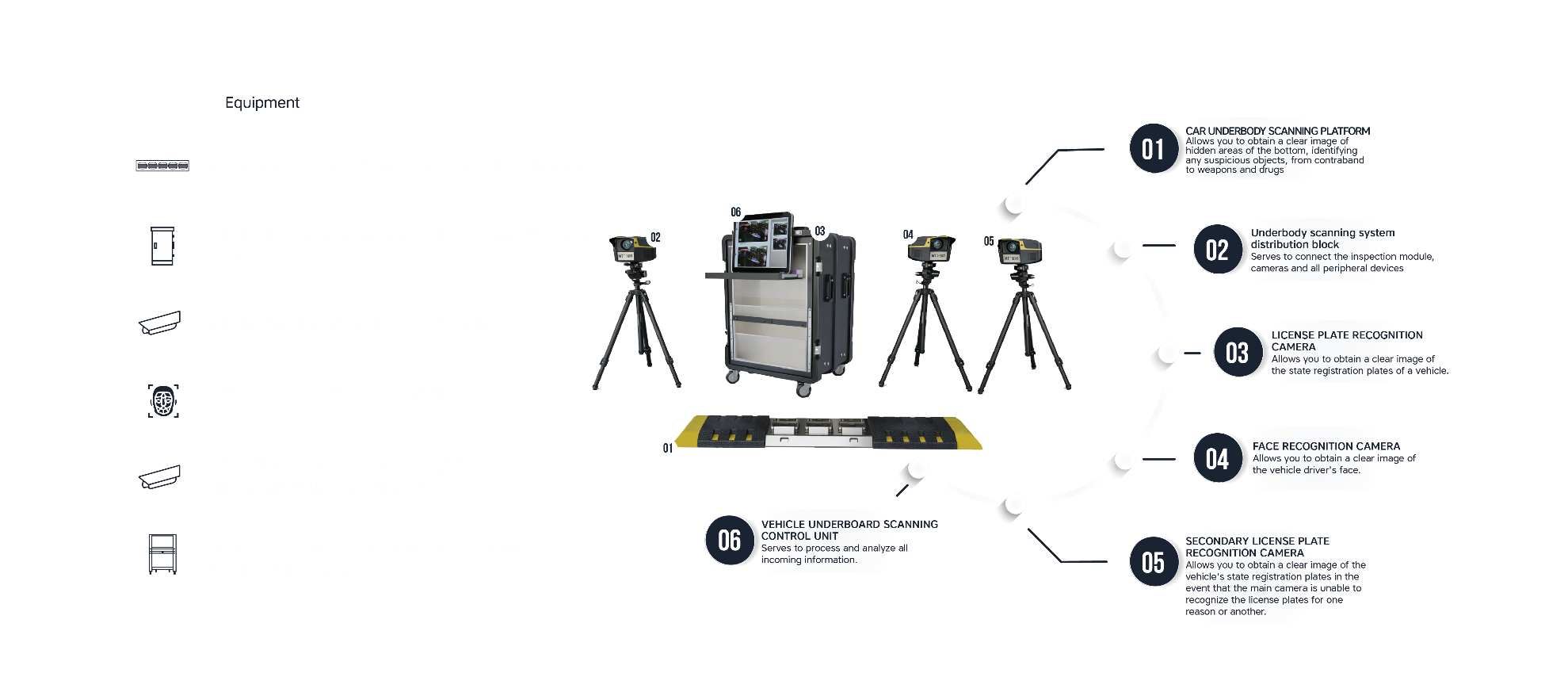
The PVUSS-400PEV Checkpoint Stationary Underbody Scanning System is an advanced solution for vehicle inspection at checkpoints. It delivers high-resolution images of concealed areas beneath vehicles, enabling the detection of suspicious objects such as improvised explosive devices (IEDs), contraband, weapons, narcotics, and GPS trackers.
The underbody scanning module is available in two configurations: built-in and surface-mounted, allowing flexibility based on installation requirements.
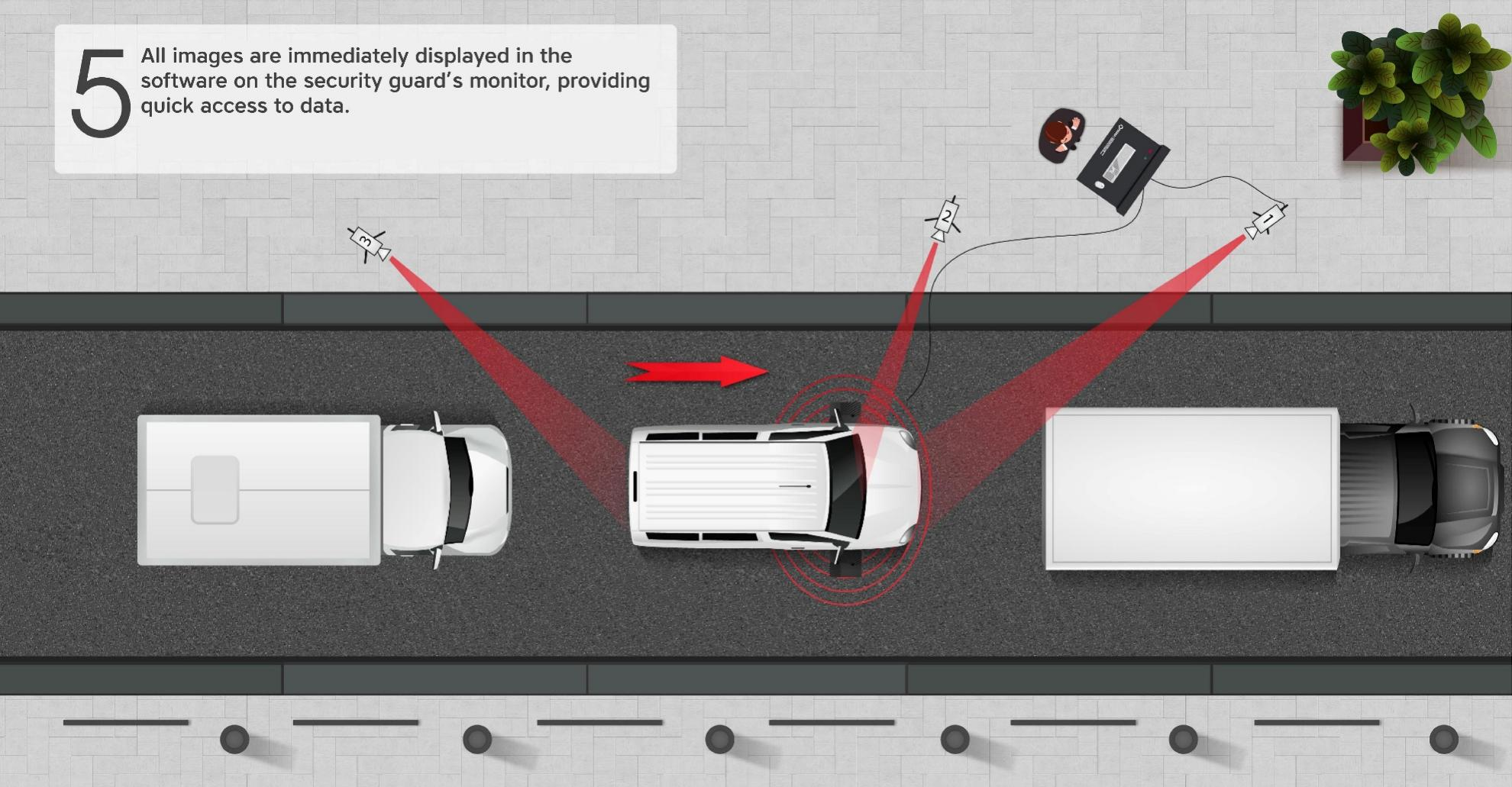
A dedicated data processing unit captures, processes, and analyzes images in real time. All data is instantly transmitted to the control center, where it is displayed on a monitor and integrated with the access control system.
The control center consists of a powerful computer that also functions as a server for receiving, storing, and managing inspection data.
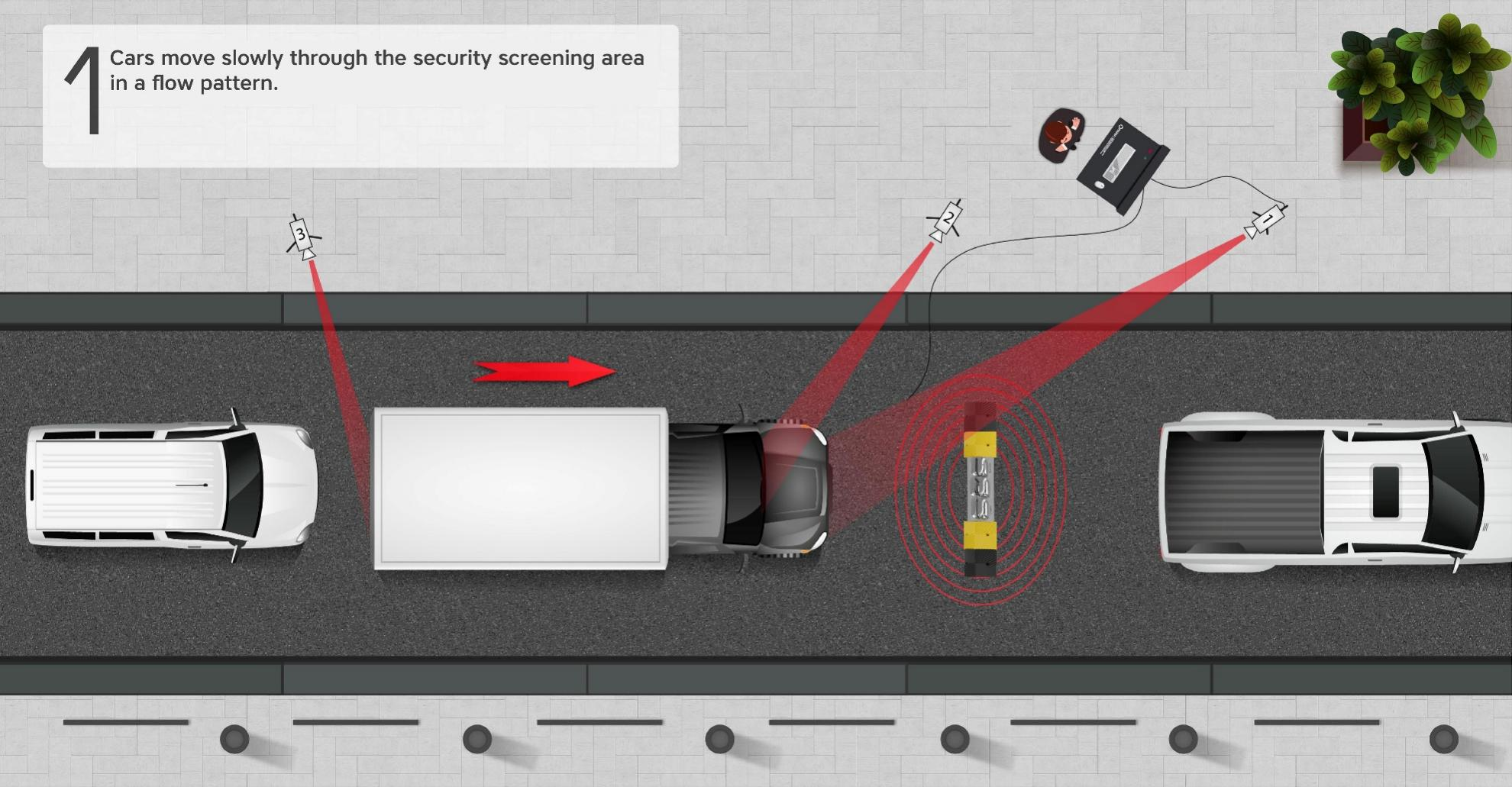
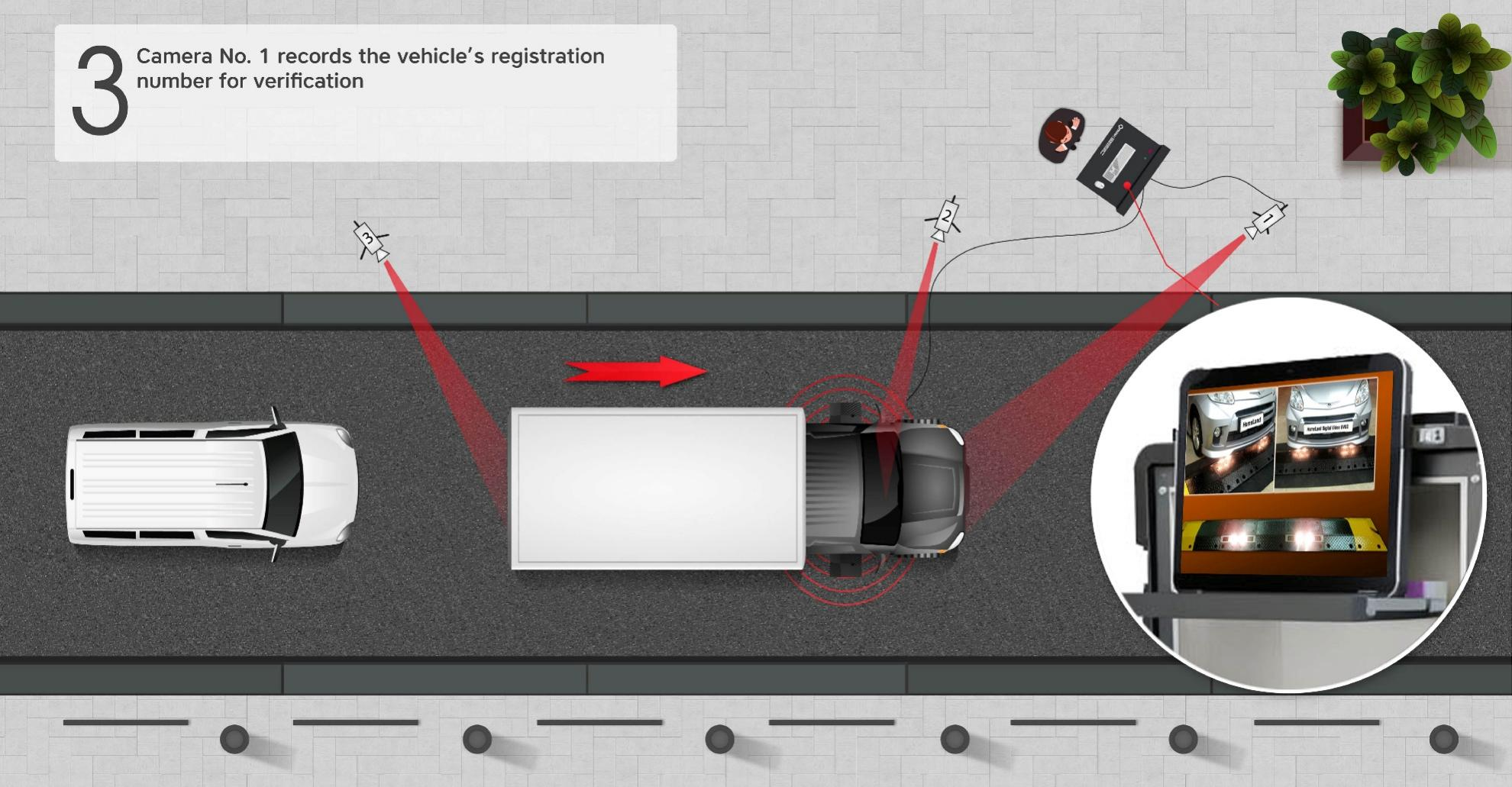
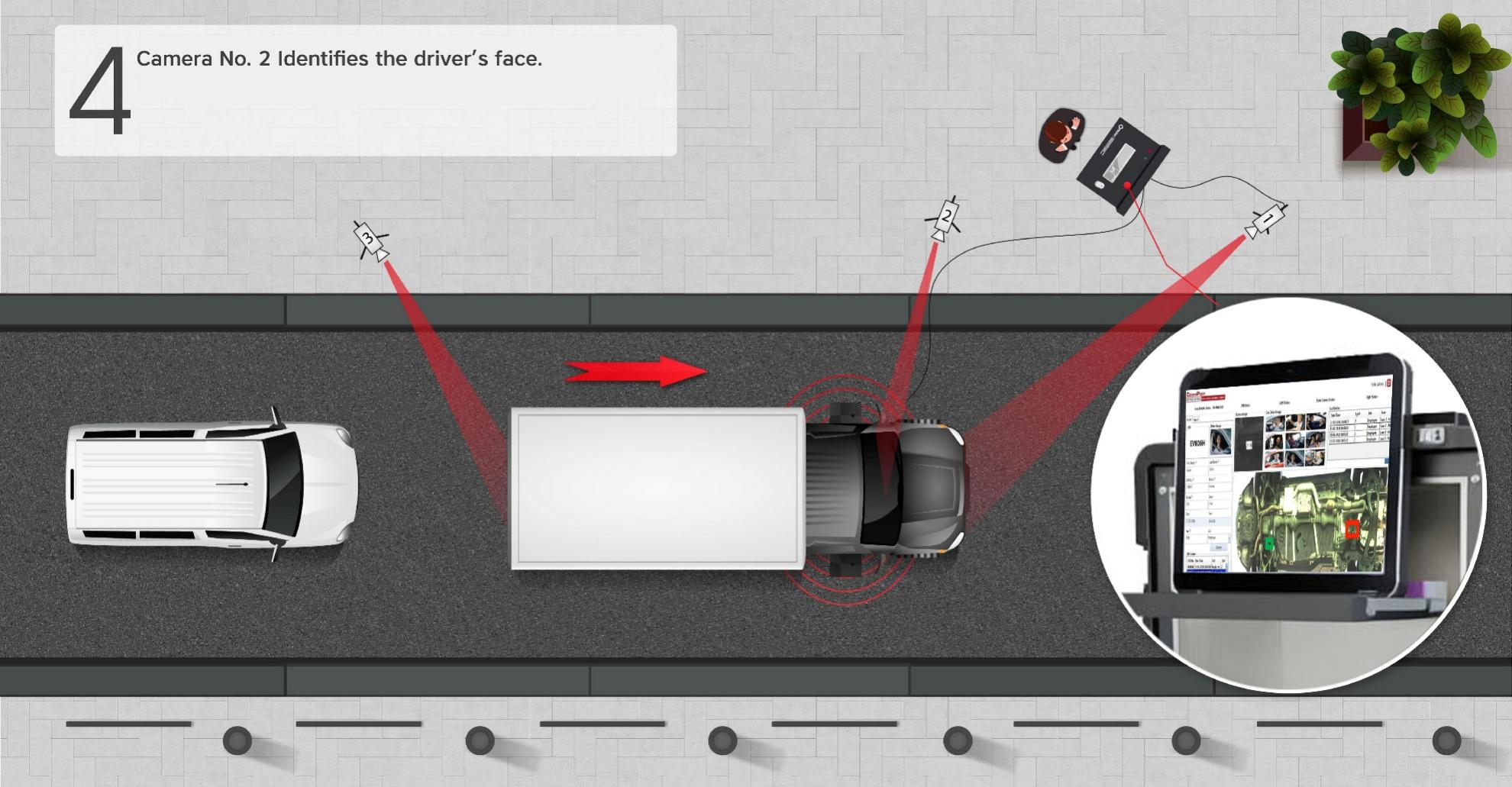
The system includes three cameras that provide:
- Clear images of front and rear license plates
- A photograph of the driver’s face These records are stored for future reference and analysis.
How the FOD System Works
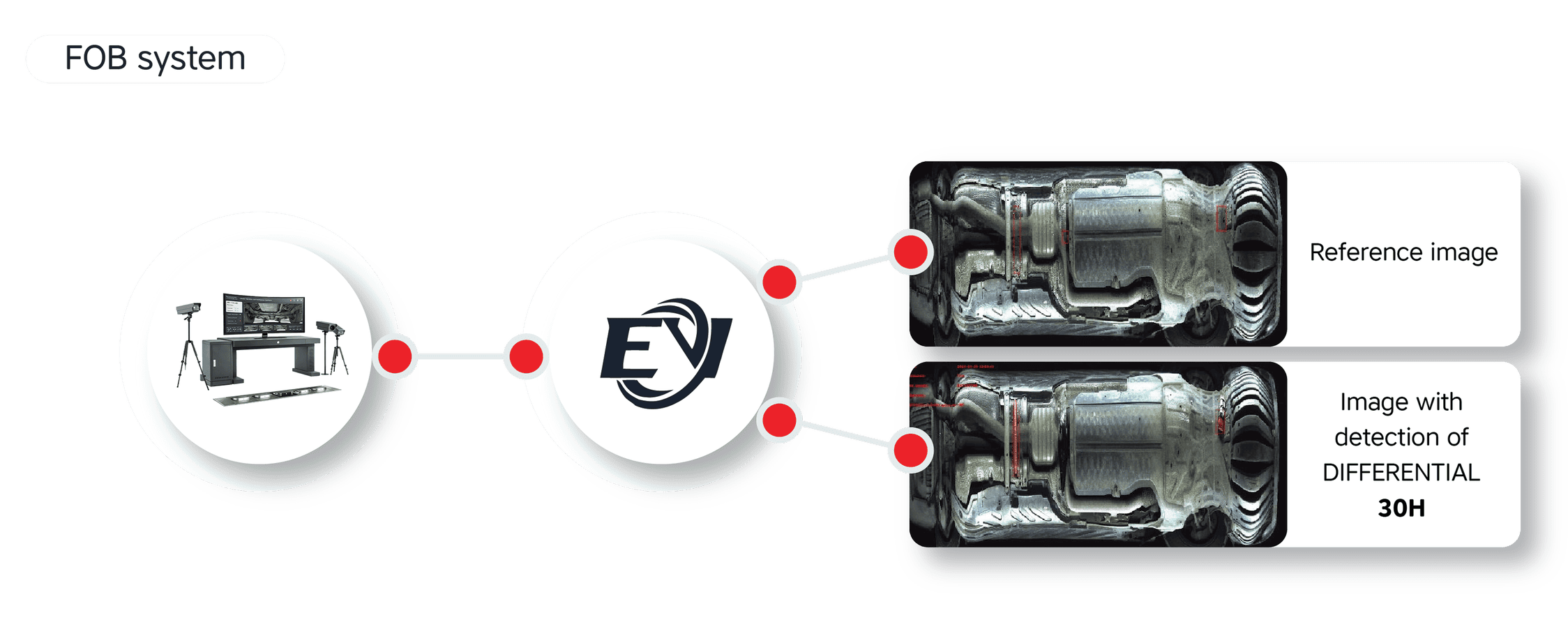
When a vehicle enters the inspection area for the first time, the system generates a high-resolution image of its underbody. The operator can designate this image as a reference with a single command. The image is then stored in the database and automatically linked to the vehicle’s license plate.
Upon subsequent entries, the system:
- Recognizes the vehicle
- Retrieves the stored reference image
- Captures a new underbody scan
- Automatically compares both images
Any differences are highlighted with visual markers (e.g., red indicators), drawing the operator’s attention to areas of concern. The system also provides visual and audible alerts when suspicious objects are detected.
For unregistered vehicles, the system operates in independent inspection mode, where the operator performs a full manual assessment without FOD comparison.
Key Features
- Automatic detection of foreign objects (up to five attached items)
- Real-time image comparison and analysis
- Adjustable sensitivity settings
- Zoom and advanced image analysis tools
- License plate blacklist functionality
- Integration with external systems (barriers, gates, access control)
These features work together to create a comprehensive and powerful perimeter security solution.
Operator Role
The FOD system is designed to assist—not replace—the operator. It enhances decision-making by automating image comparison, but final inspection and authorization always remain under operator control.
For first-time or guest vehicles, the operator conducts a full inspection without FOD assistance.
FOD is a unique system that has no analogues
The stationary underbody scanning system SUSS -500FEV is a state-of-the-art solution for vehicle inspection at checkpoints. This allows you to get a clear image of hidden areas of the bottom, identifying any suspicious objects: IEDs, contraband, weapons, narcotics, GPS trackers.
The underbody scanning module is available in 2 versions: built-in and surface-mounted. When ordering the SUSS -600FEV Eye Vigil scanning system, it is possible to choose the type of module.
Information processing switching unit – performs image acquisition, processing, analysis. All data is instantly transmitted to the control center monitor. It interacts with the ACS.
The control center is a powerful computer and at the same time performs the function of a server for receiving, storing and managing the received information.
The package includes 3 cameras that allow you to get a clear image of the front and rear license plates of the vehicle, as well as a photo of the driver’s face for further storage of scan data.
FOD System
FOD is a system that assists the operator in identifying foreign objects on the underside of the vehicle by comparing it with a reference image. FOD is a unique high-tech development.
How the system
works at the moment of the car’s first entry into the territory, a high-resolution image of its bottom is formed. The operator, pressing a key, commands the system to accept this bottom as a reference, and all further entrances of the car are compared with this image, there can be several of them. The photo of the underbody is entered into the database and automatically linked to the car number.
When the car re-enters, the system understands that an already familiar vehicle enters the territory, pulls up a reference photo from the database and takes a new photo of the bottom. Further, when comparing two photos, the system highlights elements and areas that need to be paid attention to by the operator with a red marker. Thus, it shows the differences. The operator receives visual and audible notifications when suspicious objects are detected.
The technology allows you to analyze parts with flexible graphics settings and a zoom function.
When an unregistered vehicle passes, the system activates an independent inspection, in which only the operator makes his decision on the admission of the vehicle to the territory.
The presence of additional functions simplifies the process of vehicle inspection. Blacklist of numbers, detection of foreign objects, customizable sensitivity, integration with peripheral devices – from barriers to gates – all this works in a single system, creating a powerful security tool for the external perimeter.
The system helps the operator not to visually compare the reference and new photos of the bottom, but automatically finds the differences in the pictures. The FOD identifies up to five attached items.
In the case of any guest entry, the operator independently inspects the vehicle using the underbody inspection system without the help of FOD.
The underbody inspection system and the FOD system are auxiliary devices for vehicle inspection without replacing the operator.
As a result of the first scanning of the vehicle, a separate folder weighing up to 50 MB is formed, which includes:
- High-resolution scan of the bottom.
- 2 videos.
- Photo by the EV.
- Full travel information.
Operating Procedure
The scanning system operates as follows:
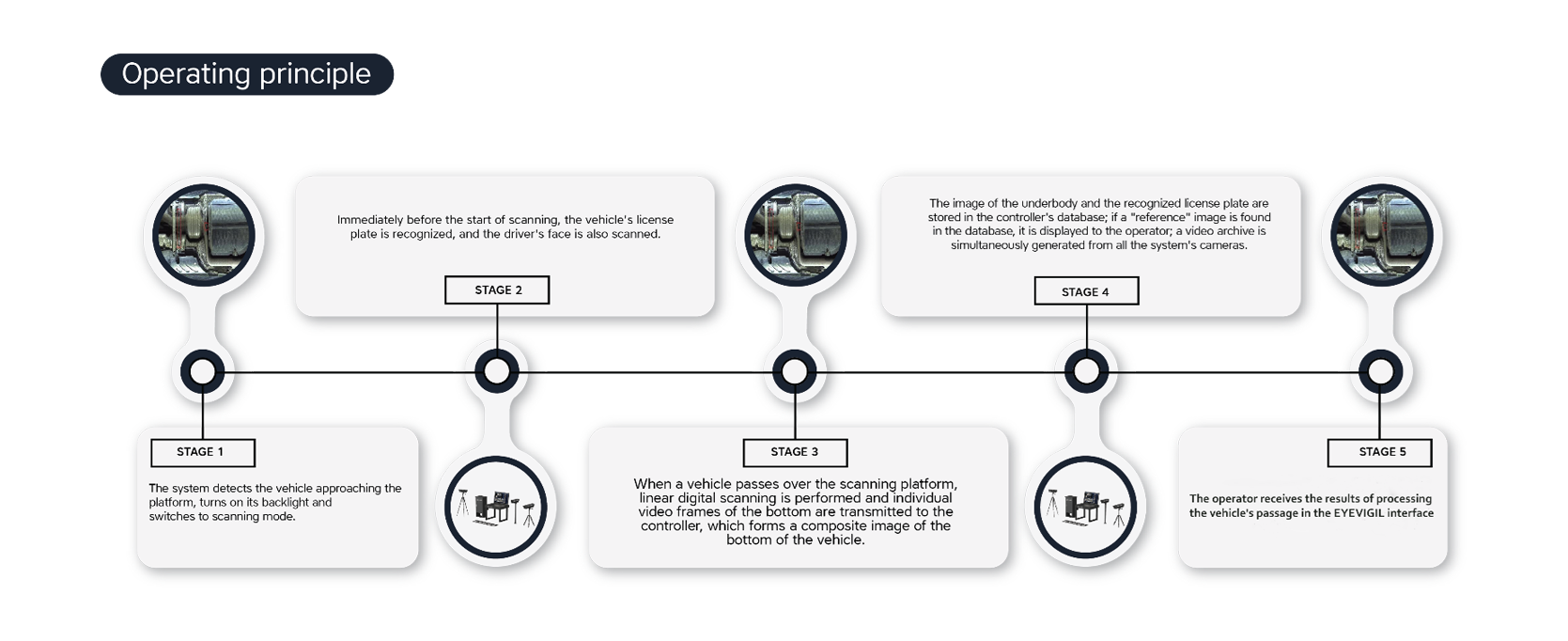
- Initial Entry
When a vehicle passes through the system for the first time, the driver’s face and the vehicle’s license plate number are recorded. - Underbody Scanning
The system captures a high-resolution image of the vehicle’s underbody. - Reference Image Creation
The operator stores the captured image in the database as a reference and links it to the vehicle’s license plate. All future inspections will be compared against this reference image. - Subsequent Entries
Upon re-entry, the system automatically recognizes the vehicle via its license plate, captures a new underbody image, and compares it with the stored reference. - Threat Detection
If a potentially dangerous or foreign object is detected, the Operator Assistance System is activated. A visual alert (“Foreign Object Detection”) appears on the screen, accompanied by an audible alarm. - Visual Highlighting
The system highlights suspicious areas in red, clearly indicating any discrepancies or attached objects. - Detailed Inspection
High-resolution imaging allows the operator to use advanced zoom functionality for close examination and detailed analysis of the detected areas.
Device Synchronization
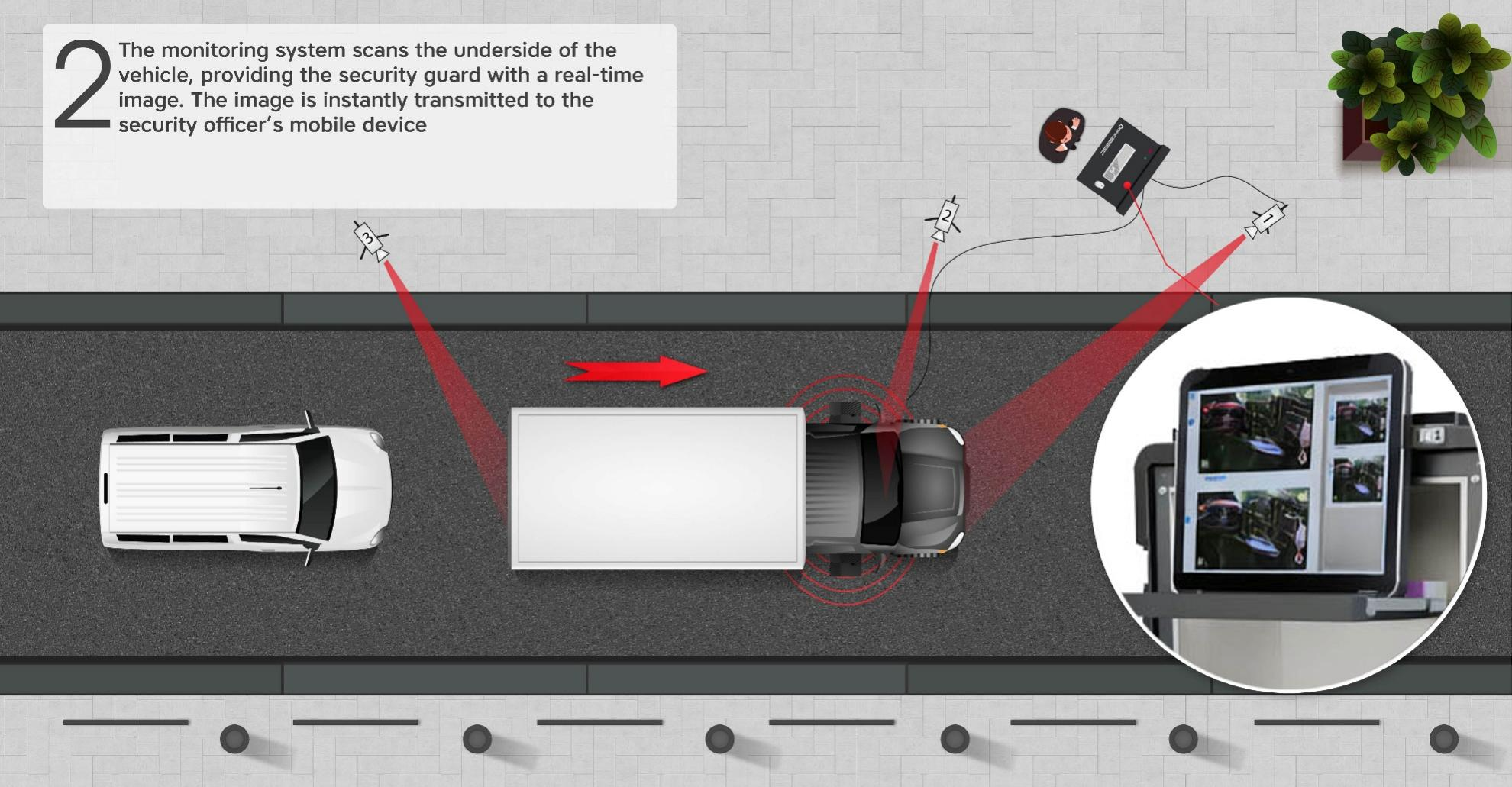
All components of the PVUSS-400PEV series from EYEVIGIL LLC—including the underbody scanning platform, recognition cameras, control unit, and operator tablet—are seamlessly connected via both wired and wireless (Wi-Fi) networks. This ensures real-time data synchronization across the entire system.
Operators receive underbody images, recognition results, and service notifications within a single, unified interface, enabling faster decision-making, higher inspection accuracy, and enhanced on-site security.
| Operating temperature (°C) | from -10° to +50 |
| Sensor type | 1/2.8-inch CMOS |
| Supply voltage | AC 100V – 240V |
| Power consumption (kW) | <0.024 |
| Server configuration | CPU i3-N305 |
| Memory | DDR5 8G, hard drive: 512G m2 SSD |
| Monitor | 27 inches, IPS screen |
| POE interface | 2 channels 10/100/1000M RJ45 |
| POE interface characteristics | Supports IEEE802.3af/at standard |
| Network interface | 1 channel 10/100/1000M RJ45 |
| Image resolution | 10000×4096 |
| Video encoding forma | tH264, H265 |
| Image encoding format | JPEG |
| Noise reduction | ==3D noise reduction |
| Wide dynamic range | 96 dB |
| Aperture control | Fixed aperture |
| Vehicle detection | Vehicle capture rate > 99.5% |
| Width of vehicle chassis | 80-2000 mm |
| Viewing angle | > 180º |
| Speed of coverage | 99% |
| Image output time | Real-time image output |
| Automatic exposure | Support |
| Car scanner body material | Stainless steel 304 |
| Pressure-resistant weight | 40 tons (vehicle weight) |
| External dimensions of the car scanner (mm) LxWxH | 590x300x69 |
| Operating temperature of the car scanner | from -40 to +70 °C |
| Waterproof class car scanner | IP68 |
| Scanning speed | Up to 40 km/h |
| Maximum load on the platform | Up to 40 tons |
Download our full product catalog for detailed specifications and options.